Emergency Medical Services
Poznań
Poznań - in short
Highlights of the direction
Bachelor degree
The course concludes with a final examination
practical profile
Graduates of this major receive initial preparation for work in the profession.
study mode
We offer medical rescue training in both formats: full-time (day-time) and part-time (evening)
six semesters
The Medical Emergency Services degree programme lasts six semesters (three years)

Poznań - informant
Get to know the direction Emergency Medical Services
Students acquire specialist knowledge of the structure and functioning of the human body, the skills to assess patients and recognise medical emergencies, and the ability to carry out the necessary medical interventions using specialist equipment. Graduates of the programme are also equipped to carry out activities relating to the teaching of emergency medical care, public health and the organisation of the healthcare system. A significant proportion of the programme consists of practical sessions held in specialist, well-equipped laboratories and at the patient’s bedside in clinical settings.
Additional information for prospective students regarding the specific nature of the degree programme Emergency Medical Services Before the start of the academic year and before commencing practical classes or work placements, students must have:
- An accident insurance policy (NNW) and a civil liability insurance policy (OC);
- A medical certificate, as required by the Regulation of the Minister of Health of 26 August 2019 on medical examinations for school applicants (Journal of Laws 2019, item 1651, as amended);
- Certificate for public health and epidemiological purposes;
- Certificate/proof of vaccination against hepatitis B;
- Certificate of no criminal record, issued pursuant to Article 21(3) of the Act of 13 May 2016 on countering the risks of sexual offences and the protection of minors (Journal of Laws of 2024, item 560).
Career prospects
Emergency medical services
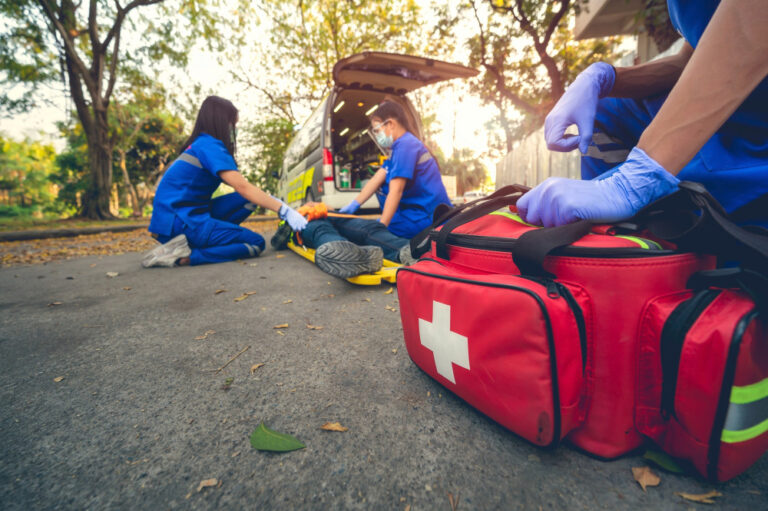
A paramedic is an independent healthcare professional specialising in providing medical care in situations where there is an immediate threat to health and life. They are often the first person to provide professional medical assistance to victims of accidents and sudden, serious illnesses. The duties of a paramedic include, amongst other things, ensuring the safety of people at the scene of an incident, carrying out the necessary emergency medical procedures, and safely transporting patients to A&E departments or specialist medical facilities.
Graduates of the Emergency Medical Services programme are prepared to work in public and private healthcare facilities, hospital A&E departments, emergency medical teams and specialist emergency services operating within the National Emergency Medical Services system and the Emergency Call Centre, Crisis Management Centres, units of the State Fire Service, the Armed Forces of the Republic of Poland, the Police and other uniformed services; as a first-aid instructor in: schools, organisations cooperating with the National Medical Emergency Service, workplaces with a high risk of accidents, and services dealing with health and safety at work; as a medical coordinator in the provision of medical cover for mass events.
The Act of 1 December 2022 on the profession of paramedic and the self-government of paramedics.